Joseph Llobrera of the Center for Public Policy and Priorities (CBPP), explains explains
that due to the economic crisis, “rising food need and higher food
prices are making it even tougher for many to make ends meet.” Growing
numbers of households are reporting difficulty affording food and
meeting other basic needs.
Particularly alarming is the rise in the number of children whose
families report that they aren’t getting enough to eat, which can have long-term consequences
for their health and well-being. And, due to longstanding inequities
exacerbated by COVID-19’s disproportionate impact on Black and Latino
communities, families of color are likelier to struggle to afford enough food.
Showing posts with label Congress. Show all posts
Showing posts with label Congress. Show all posts
Monday, August 03, 2020


Thursday, June 18, 2020
Broad Coalition Urges Senate Leaders to Boost SNAP During Crisis

The letter asks for a 15 percent boost in the Supplemental Nutrition Assistance Program (SNAP) maximum benefit, an increase in the SNAP minimum monthly benefit from $16 to $30, and a suspension of SNAP time limits and rules changes that would cut SNAP eligibility and benefits.
Read press release from the Food Research and Action Center (FRAC)
Among the national organizations singing the letter are Bread for the World, MAZON: A Jewish Response to Hunger, the Evangelical Lutheran Church in America (ELCA), Islamic Relief USA, the Episcopal Church, Challah for Hunger, 1,000 Days, A Place at the Table, Meals on Wheels America, Children's Defense Fund, and hundreds more.
The New Mexico signators include some participants in the Food, Hunger, Water and Agriculture Policy Work Group, including Agri-Cultura Cooperative Network, Feeding Santa Fe, Inc., New Mexico Center on Law and Poverty, New Mexico First, New Mexico Healthy Soils Working Group, Roadrunner Food Bank, and the Food Depot.
Here is an excerpt
June 18, 2020
The Honorable Mitch McConnell
Senate Majority Leader
U.S. Senate
U.S. Senate S-230,
U.S. Capitol Building
Washington, DC 20510
The Honorable Chuck Schumer
Senate Minority Leader
U.S. Senate S-221,
U.S. Capitol Building
Washington, DC 20510
Dear Majority Leader McConnell and Minority Leader Schumer,
Our nearly 2,500 undersigned national, regional, state, and local organizations urge immediate action to address the twin challenges of COVID-19 — protecting individuals and communities against hardship and jump-starting a strong economic recovery. SNAP benefit boosts can help limit the depth and duration of the human and economic tolls this crisis threatens to exact.
COVID-19 has exacerbated already too high levels of food insecurity in America. According to the Urban Institute, in the early weeks of the pandemic, one in five U.S. adults experienced food insecurity
Also, in the early weeks of COVID-19, Labor Department data document that one of every four workers filed for unemployment insurance; the April unemployment rate hit 14.7 percent; and the combined rate of unemployed, discouraged, and part-time for economic reasons workers spiked above 22 percent.
Sufficient and timely federal government action is needed to prevent even more human suffering and lost productivity in the short and longer terms.
SNAP is a proven countercyclical tool. Each $1 of SNAP benefits during a downturn generates between $1.50 and $1.80 in economic activity. Participants spend those benefits quickly, with positive impacts felt up and down the food chain — from farmers and food producers, to grocery retailers, stock clerks, and local economies.
The lines for food at emergency feeding sites offer a picture of the human suffering that data can only begin to explain. This crisis demands a response that is commensurate with its scope and seriousness. For every one meal provided through the Feeding America food bank network, SNAP can provide nine meals on the normal rails of commerce. SNAP boosts must be an important part of an effective, comprehensive response to COVID-19.
Here is the full letter and see the full list of signators
Monday, June 01, 2020
A Bread Advocacy Summit in (Cyber) Space

During normal times, travel to Washington for Bread's national advocacy summit is costly and time-consuming. This means that only one or two (or in good years five) people attend the Bread event. But these are not normal times. The advocacy summit is taking place online on June 8-9, which means no need for air travel or lodging arrangements. So more of us can participate.
 |
| Lobby Day 2019 |
However, this year's advocacy summit offers some worthwhile features. Workshops are still on the agenda, including pre-recorded and livestreamed sessions, as well as select opportunities to chat in real-time with workshop moderators and engage in virtual advocacy actions.
For us in New Mexico, we hope to connect with the offices of Reps. Deb Haaland, Xochitl Torres-Small and Ben Ray Lujan and Sens. Tom Udall and Martin Heinrich. We's love to have participation from all three New Mexico congressional districts.
Here is the schedule.
Monday, June 8
10 a.m. - 10:40 a.m. (MT)
Opening Message
Introduction of Clergy
Reflection and Prayer
Opening Message
Introduction of Clergy
Reflection and Prayer
11 a.m. - 11:45 p.m. (MT)
Healing the Divide
Healing the Divide
12:00 p.m. - 12:45 p.m. (MT)
Advocating Alone Together
Advocating Alone Together
1 p.m. - 2 p.m. (MT)
Latino Leaders Convening
Latino Leaders Convening
5:30 p.m. - 6:28 p.m. (MT)
Pan African Consultation
Pan African Consultation
6:30 p.m. (MT)
Closing Message
Closing Message
Tuesday, June 9
10 a.m. - 10:40 p.m. (MT)
Opening Message
Introduction of Clergy
Reflection and Prayer
Opening Message
Introduction of Clergy
Reflection and Prayer
11 a.m. - 12:45 a.m. (MT)
Legislative Briefing and Q&A
Legislative Briefing and Q&A
11:45 a.m. - 12:00 p.m. (MT)
Closing Message/Send Off
Closing Message/Send Off
12:00 p.m. - 3:00 p.m. (MT)
Virtual Congressional Advocacy Action
Virtual Congressional Advocacy Action
4:30 p.m. - 5:30 p.m. (MT)
Rick Steves Documentary Screening
Rick Steves Documentary Screening
5:30 p.m. - 6:15 p.m. (MT)
Q&A with Rick Steves
Now
that you have the schedule, I urge you to consider participating. As
of Friday, May 29, only two of us had registered. Since then, I heard from three others who said they would participate. Would you join us so we can have at least a dozen New Mexicans at the advocacy summit?Q&A with Rick Steves
Register Here
Saturday, March 14, 2020
House Bill Assists People Affected by COVID 19 Virus
 |
| This is not the actual video, just a screenshot. The link is below |
💉 Guarantees free testing
👪 Provides paid leave
💵 Supports strong unemployment benefits
🍲 Expands food assistance
Wednesday, December 19, 2018
Senator Heinrich Comments on Recent Passage of Farm Bill
"We must...do more to ensure no child is hungry and that all of our kids have the opportunity to live a healthy and productive life. That's why I'm proud that we successfully fought back against efforts to impose harmful eligibility requirements for the Supplemental Nutrition Assistance Program (SNAP) into the Farm Bill. SNAP provides affordable food for New Mexico families in need. We should be working to find solutions that help level the playing field for hard-working families instead of pulling the rug out from under those who are struggling."
 |
| Photo of then Rep. Heinrich (2009) |
Dear New Mexico Constituent:
I grew up helping my parents run a small cattle operation, which is where I learned to truly value the hard work farmers and ranchers do each and every day to produce the food we eat. In New Mexico, our farmers, dairy producers, and ranchers help drive the state's economy and are an integral part of our history. That's why I worked so hard to pass the 2018 bipartisan Farm Bill this month.
The Farm Bill will deliver agricultural funding and set our nation's food policy for the next five years. It provides certainty for New Mexico's farmers so they can continue producing and contributing to our economy. The bill has far reaching impacts that include expanded opportunities for veterans and socially disadvantaged farmers, protections for our land and water, investments in high-speed internet access in rural and tribal communities, and support for important food and nutrition programs.
In an era of severe drought, extreme fires, and climate disruption, we must take steps to promote long-term sustainable use of New Mexico's land and water. That's why I'm especially pleased the Farm Bill includes my provisions to improve the health and resiliency of New Mexico's forests and watersheds and reduce the risks of costly catastrophic wildfires. My measures will provide New Mexico communities with substantial resources and the best available science so we can complete large, landscape-scale forest restoration projects and sustainably use our limited water resources.
We must also do more to ensure no child is hungry and that all of our kids have the opportunity to live a healthy and productive life. That's why I'm proud that we successfully fought back against efforts to impose harmful eligibility requirements for the Supplemental Nutrition Assistance Program (SNAP) into the Farm Bill. SNAP provides affordable food for New Mexico families in need. We should be working to find solutions that help level the playing field for hard-working families instead of pulling the rug out from under those who are struggling.
I'm proud of the wins were able to secure for New Mexico in the 2018 Farm Bill. I won't stop working to advance policies that support job creation and opportunity, and help families benefit from our growing economy.
Sincerely,
MARTIN HEINRICH
United States Senator
Sunday, December 16, 2018
New Mexico Legislators Vote to Support Farm Bill

Call (800-826-3688) and thank Sens.. Udall and Heinrich and Reps. Pearce and Lujan for helping pass the legislation.
How did the rest of the representatives and senators vote? The Senate passed the bill 87 to 13. The House passed it 369 to 47.
According to the Food Research and Action Center (FRAC), the initiative protects the Supplemental Nutrition Assistance Program (SNAP), the critical investment that ensures nearly 40 million people who struggle against hunger in this country can afford to put food in their refrigerators and on their tables. Read More
Beyond protecting SNAP, the measure contains other provisions that help address hunger in our country and overseas. Here is a note from Rev. David Beckmann to Bread members following the passage of the Farm Bill.

This week, Congress sent the president a bipartisan farm bill that protects and strengthens the Supplemental Nutrition Assistance Program (SNAP) and makes key improvements to international food aid programs.
In a year that has too often been divisive, we celebrate that members of Congress worked together to pass a bipartisan bill.
This success would not have been possible without Bread members’ faithful advocacy — your letters, phone calls, emails, and persistent encouragement for a farm bill that helps end hunger made a difference.
In addition to SNAP, this bill includes funding for nutrition incentives and produce prescriptions that will improve access to healthy foods and connect individuals and households to jobs. It has international impact, too — changes to food aid that will make these programs more efficient and expand their reach to more people.
This farm bill will put the United States on track to end food insecurity and hunger in our country and save millions of lives overseas. Thanks be to God!
Grace and peace,
Rev. David Beckmann
President, Bread for the World
Wednesday, August 22, 2018
Making Hunger a Priority at the Ballot Box

"Working together, we aim to elevate the issues of hunger, poverty, and opportunity with candidates during this election cycle through a nonpartisan voter education campaign. This campaign compliments efforts Bread for the World members are already doing to ensure hunger is a key issue in the 2018 midterm elections."

Here is how.
- Sign up for email communications from the campaign.
- Register for a special Vote to End Hunger webinar, scheduled for Wednesday, September 5 at 2:00 p.m. EDT.
Saturday, August 18, 2018

Sunday, May 20, 2018
Prayer AND Advocacy During Farm Bill Deliberations
 We need both action and
contemplation to have a whole spiritual journey. It doesn’t matter
which comes first; action may lead you to contemplation and
contemplation may lead you to action. But finally, they need and feed
each other. -Rev. Richard Rohr, OFM
We need both action and
contemplation to have a whole spiritual journey. It doesn’t matter
which comes first; action may lead you to contemplation and
contemplation may lead you to action. But finally, they need and feed
each other. -Rev. Richard Rohr, OFMLast week, we received two separate notes from Bread for the World. One note came from Bishop José García, senior advisor for prayer and strategic initiatives, who urged us to join the monthly prayer circle to include two requests in our prayers: the well-being of low-income individuals whose benefits are running out, and wisdom and compassion for our members of Congress as they debate the farm bill.

To support your fast and create community, we are starting a monthly Prayer Circle. Please join us May 21 at 12 p.m. (EDT).
The Prayer Circle will be led by our special guest Rev. Art Simon, founder of Bread for the World. We will pray for Congress to write a farm bill that protects and strengthens domestic nutrition programs and fully funds and continues to improve our international food aid programs.
Register for the Circle of Prayer
 Advocacy: The second note came from Christine M. Ashley, interim co-director of
government relations, who asked us to contact our legislators in the
House of Representatives to urge them to vote against H.R.2 the
Agriculture and Nutrition Act (H.R.2).
Advocacy: The second note came from Christine M. Ashley, interim co-director of
government relations, who asked us to contact our legislators in the
House of Representatives to urge them to vote against H.R.2 the
Agriculture and Nutrition Act (H.R.2)."The farm bill imposes SNAP benefit and eligibility cuts in addition to stricter work requirements, in the name of getting SNAP recipients back to work" said Ms. Ashley. "If enacted, these changes would make it harder for families with children, people with disabilities, and seniors to get the food they need,"
Ashley wrote the note two days before H.R. 2 was defeated in the House by a vote of 213-198. The threat a punitive Farm Bill has not gone away, so the appeal to advocacy still stands. However, the strategy has shifted.
Here is a note from Food Research and Action Center: Thank House Members who voted “No” on H.R. 2 and urge them to reject the motion to reconsider; urge Senators to protect and strengthen SNAP, including by rejecting SNAP cuts and by improving adequacy of SNAP benefits.
And this note appeared in the Bread Blog: Unfortunately, House Speaker Paul Ryan could bring this bill back up for a vote again early next week, so we will need to ensure our members of Congress stand strong in opposing these harmful cuts. Call your representative (800-826-3688) to thank them for voting against the bill or to oppose their support for the bill. (list of yeas and nays)
Thursday, May 17, 2018
House Candidates Discuss Immigration, Poverty at Forum in #ABQ
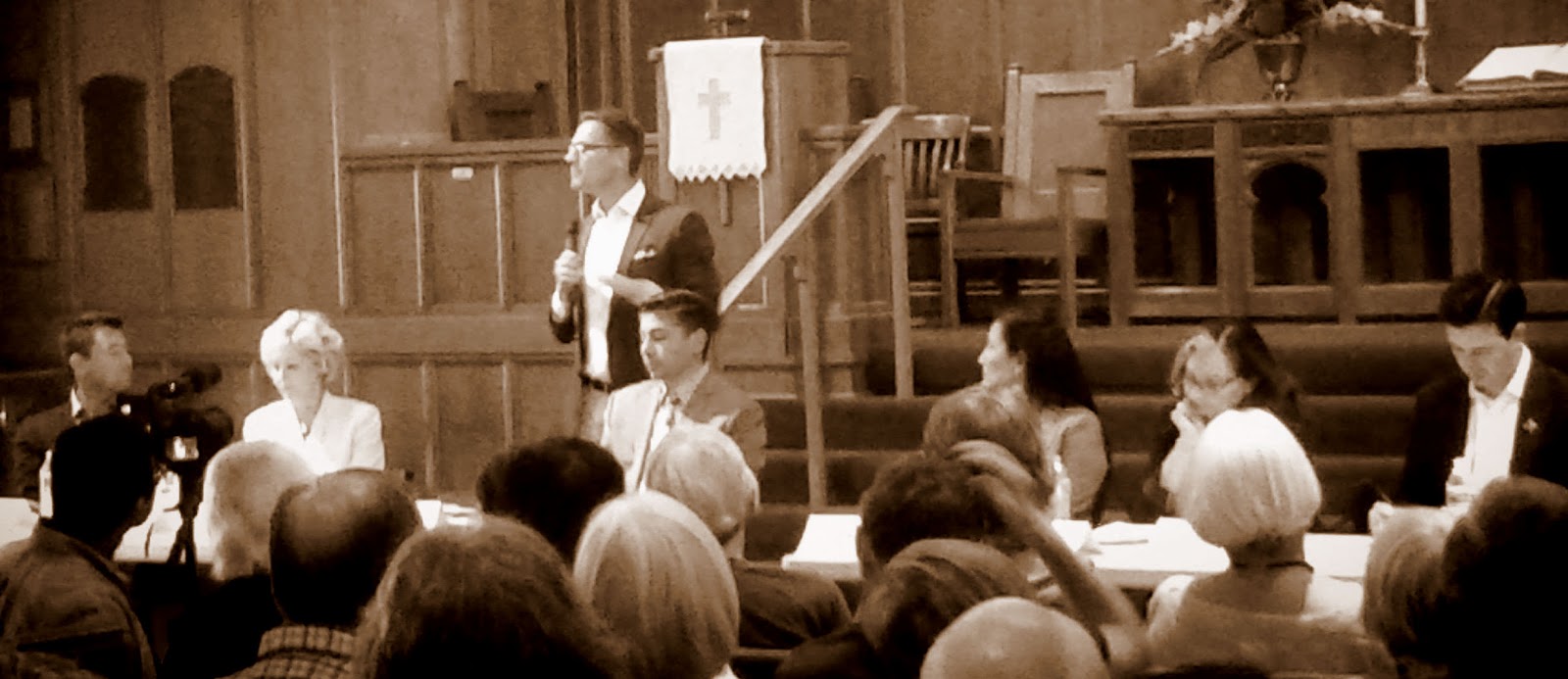 |
| Davis, Arnold-Jones, Princeton (standing), Lara, Haaland, Sedillo Lopez, Moya, Martinez (off frame) |
The forum was organized by the New Mexico Faith Coalition for Immigrant Justice, Among the immigration issues that were discussed were the role of local police in enforcing immigration policy, the Deferred Action for Childhood Arrivals (DACA) program and locations within the city where immigration enforcement personnel should not be allowed to seek undocumented immigrants.
Poverty and Economic Development
One of the "other" issues that were discussed was child poverty and poverty in New Mexico in general. As one who works on addressing hunger and poverty in our state, our country and overseas, this was an area of particular interest. The candidates addressed this issue in a somewhat superficial manner. To be fair, they couldn't go in depth because they were given 90 seconds to make a statement.
Here are some comments that stood out for me that were directly or indirectly relevant to the Bread for the World Offering of Letters, entitled For Such a Time as This. In New Mexico, the focus of our letters is on protecting the Supplemental Nutrition Assistance Program (SNAP), which affect so many individuals and families in our state. Haaland addressed this issue directly. "Kids cannot learn when they're hungry," she said. However, Martinez spoke of protecting safety net programs, and Sedillo Lopez spoke of the need to "radically expand" the earned-income tax credit (EITC), which is a position that Bread has supported.
Sedillo Lopez and Davis both spoke of the need to increase the minimum wage, although the former mentioned a specific figure: $15 per hour and then link any increases to inflation.
Another area that was discussed was education--specifically early childhood education, which the candidates agreed could use more support. "The surest way out of poverty is to fix education," said Moya. This was also a point of emphasis for Martinez, Sedillo-Lopez and Davis. Lara mentioned the need to expand Headstart.
Arnold Jones addressed the need to reduce overregulation to promote economic growth in the state, while Princeton suggested that more effort should go to programs like vocational training in the state to help boost employment.

While the forum did not lend itself to a broad discussion on hunger and poverty in New Mexico, we are hoping to raise the issue to the candidates between now and the November election.
After June 5, only one of the six Democrats will remain in the race, along with Arnold-Jones and Princeton. We hope to promote letters to the three candidates as part of our ongoing Offering of Letters efforts in New Mexico (along with continuing letters to our current House and Senate members). The Congressional seat in the 2nd district is also open, so we may address letters to the eventual nominees seeking to replace Rep. Steve Pearce, who is also running for governor. Stay tuned for more details.

I was pleased to learn that the location of the congressional debate, First Presbyterian Church, is planning an Offering of Letters on May 20, a fact that Rev. Matthew Miller, pastor of the church, proudly pointed out to me. The letters written on May 20 will be dedicated on May 27. Special thanks to Kirsten Marr for organizing this effort at First Presbyterian Church.
Friday, May 04, 2018
Feeding America Sets Call-in Day for Tuesday
 |
| Image from Bread for the World |
Here is another way to take action. Feeding America and its local affiliates around the country, including Roadrunner Food Bank in Central and Southern New Mexico, are urging anti-hunger advocates around the country to participate in National Call-in Day on Tuesday, May 8, to oppose cuts in SNAP the Farm Bill.
Here’s a few details about the call in:
- Dial Feeding America’s toll free number, (888) 398-8702
- Listen to the pre-recorded message.
- Enter your zip code and be connected to your Representative
- Once you are connected to your Member of Congress, state that you are a constituent and give your name and the town you are calling from. Let the office know you are calling about The Farm Bill.
(Please use the following script to help oppose cuts to SNAP and advocate for a strong Farm Bill).
I’m calling from [community name] which [Congressperson’s name] serves.
I’m concerned about the House Farm Bill. The bill’s severe cuts to the SNAP program through burdensome and unnecessary work time limits and restrictions on eligibility will lengthen the lines at our pantries, soup kitchens, and other sites that serve hungry people in my community.
Charitable hunger programs in our state will not be able to meet the demand of these proposed SNAP cuts. The deep cuts to SNAP will negatively impact the people we serve and increase hunger in our community.
I’m asking you to oppose H.R. 2 – the Agriculture and Nutrition Act of 2018 and to come up with a bipartisan bill that protects and strengthens this vital program.
Thank you for passing my thoughts and concerns along to (Congress person’s name here).
Thursday, May 03, 2018
New Mexico Organizations Urge Congress to Protect SNAP
 |
| Photo: SNAPWorks |
Sign your advocacy organization onto our letter to the New Mexico congressional delegation asking them to oppose the cuts to SNAP in the Farm Bill Here is a link for organizations to sign by May 10.
(The Southwest Organizing Project also offers a link for individuals to contact Congress)
We write to urge the New Mexico congressional delegation to fully fund and protect the Supplemental Nutrition Assistance Program (SNAP) in the 2018 Farm Bill. 1 in 4 New Mexicans , and about 99,000 children rely on SNAP to eat. SNAP reduces hunger and poverty, improves health and learning, increases productivity, creates jobs, and invests in the future of our communities.
The undersigned are state and local organizations committed to ensuring a strong and effective nutrition safety net for New Mexico families. We call on our Congressional Delegates to oppose the current Farm Bill because it will reduce access to SNAP for hundreds of thousands of New Mexicans and make it harder for families with unemployed or underemployed adults to eat or find work.
 |
| Image: Lutheran Advocacy Ministry-NM |
Throughout our state, far too many families are struggling to make ends meet. In New Mexico, 332,610 people are food insecure, accounting for 16 percent of the state’s population. Of these individuals at risk for hunger, 125,000 are children, which is 26 percent of the children in the state. SNAP, as our state’s most effective anti-hunger tool, has the broadest reach to address these individuals quickly and effectively. It helped 471,000 New Mexicans put food on the table last year alone. Nearly two-thirds of those who use the program are children, the elderly, or people with disabilities. In 2016, 41 percent of households participating in SNAP in New Mexico were living in deep poverty, with incomes below 50 percent of the federal poverty guideline. SNAP makes sure basic needs are met by keeping 76,000 people out of poverty in New Mexico, including 36,000 children, per year, between 2009 and 2012.
SNAP is an Important Work Support for New Mexico Families
For hundreds of thousands of New Mexicans, work does not itself guarantee steady or sufficient income to provide for their families. SNAP helps 1 in 7 workers in New Mexico by providing food when wages aren’t simply enough. Workers turn to SNAP to supplement low and fluctuating pay and to help families get by during spells of unemployment. Some of the most common occupations in the state have low wages, unpredictable scheduling, and few benefits. For example, the most common occupations among New Mexicans participating in SNAP have hourly wages far below the state average of $21.23 in 2016. Over two-fifths of personal care aides, over one-third of cooks and childcare workers, and one-third of housekeeping cleaners participate in SNAP in New Mexico. SNAP is a crucial support for workers because they can apply when their income drops and receive benefits rapidly and on a monthly basis. SNAP benefits also provide help when hours drop and limited scheduling makes working more hours difficult.
SNAP Creates Jobs and Brings Millions of Dollars into our Local Economy
SNAP benefits are spent at more than 1,590 authorized retailers in New Mexico, including grocers and local food retailers around the state. $650.5 million of SNAP benefits were redeemed in New Mexico in 2017 alone. Every dollar of federal SNAP benefits generates $1.70 in economic activity. A 2010 study by the USDA found that for every $1 billion of added SNAP funding, between 8,900 and 17,000 jobs were created.
Cuts to Food Assistance in the Farm Bill Will Hurt New Mexico Families
The Farm Bill that would make it harder for over a hundred thousand New Mexicans to put food on the table by cutting SNAP benefits by 20 billion dollars over the next ten years and shifting this money into an untested work program with unforgiving penalties that could reduce benefits for families up to three years. As you know unemployment rates in New Mexico are the second highest in the country, in some counties even doubling and tripling the national average. The bill would take away food assistance from unemployed or underemployed SNAP participants between ages 18 through 59 who are not disabled, including parents of children over six years old. This will directly impact over 120,000 New Mexicans, who will face the loss of SNAP and hundreds of thousands of other participants who live in the same households as unemployed workers.
The 2018 Farm Bill would also restrict a state option known as “categorical eligibility”, which allows states to adjust income cutoffs for those making a little more than the federal eligibility cutoff amount of 130 percent so families are not suddenly cut off of SNAP because of a small increase in income. This change would affect 31 states, including New Mexico, and essentially impose a benefit cliff that any family needing food assistance could face if they are able to make a little more than 130 percent of the federal poverty guideline while receiving SNAP benefits.
Changes to federal food assistance programs will also impact Native American communities in New Mexico, which include 23 sovereign nations. As of February 2018, 75,637 SNAP participants in New Mexico were Native American. The federal government must engage in government to government consultation prior to changing federal food programs that impact Native Americans. These governments have not been consulted about the proposed changes in the Farm Bill. The proposed Farm Bill would also eliminate federal requirements that food distribution participants on Native American reservations be surveyed to determine which traditional foods should be included in distributions. Native American nations have the right to govern their affairs and protect the health and well-being of their peoples.
We call on you to protect and defend the federal nutrition programs from structural changes and to fully fund and defend SNAP from budget cuts, taking steps to ensure all people in New Mexico have access to the nutrition they need to live healthy and productive lives. We call on you to protect one of the most effective forms of economic stimulus the state can offer many local businesses that are authorized to accept SNAP benefits. The proposed cuts and changes to SNAP will take away food from children, working people, people struggling to find jobs, and many others struggling just to make ends meet.
We stand ready to work with our members of Congress to protect this important program.
Sincerely,
Saturday, April 28, 2018
Sounding the Alarm on a Harmful Farm Bill
The House Farm Bill would take food out of the refrigerators and off the kitchen tables of households participating in the Supplemental Nutrition Assistance Program (SNAP) and set up an unproven workforce bureaucracy that would burden states and participants alike. Low-income seniors, people with disabilities, veterans, unemployed adults, and families with children already are struggling to purchase adequate diets throughout the month on low wages and modest SNAP benefits . Cutting SNAP eligibility and reducing benefits will increase hardship and food insecurity and depress purchasing power that drives local economic activity across America . -Food Research and Action Center

While the Committee was successful in passing its version of the farm bill (albeit on a strict party line vote), there was no real markup nor substantial debate over the policies put forth in the draft bill. The draft bill came out just days before the scheduled markup, it did not go through the regular order through markup in the various subcommittees and then on to the full committee, and it went through the full committee in the shortest amount of time ever for a farm bill — hardly a stellar case of democracy in action. -National Sustainable Agriculture CoalitionAnti-hunger organizations agree that the version of the Farm Bill that was approved in the House Agriculture Committee last week could harm working families and vulnerable populations in our country. One of the most harmful provisions of the proposed legislation is a reduction in funding and stringent and unrealistic work requirements for the Supplemental Nutrition Assistance Program (SNAP). A handful of respected anti-hunger organizations have put together a brief analysis of the proposed legislation, including links to contact our members of Congress. We included the input from a couple of organizations in New Mexico.

The bill maintains and improves international food aid programs. However, it also proposes changes to the Supplemental Nutrition Assistance Program (SNAP) that would put millions of Americans at risk of hunger.
Take Action: Call (800-826-3688) or email your congressional representative and tell them to protect SNAP and oppose the House Farm Bill as written.
Write to Congress The proposed bill also imposes benefit and eligibility cuts in addition to stricter work requirements, in the name of getting SNAP recipients back to work. But SNAP already encourages work. When individuals can meet their basic needs, they don't need to worry about where their next meal will come from. Rather, they can focus on finding and keeping a job.

Take Action: Recess is the opportune time to engage with your Members of Congress while they are home. Send them back to D.C. with a clear message: the House Farm Bill would take food out of the refrigerators and off the kitchen tables of more than one million households participating in the Supplemental Nutrition Assistance Program (SNAP), leading to greater hunger and poverty and reduced economic growth and productivity in communities across the country.
New Mexico Food and Agriculture Policy Council


- New work requirements that would require SNAP beneficiaries between ages 18 and 59 who aren’t disabled or caring for a child under 6 to work at least 20 hours and week or participate 20 hours a week in a work program. States would need to build systems and procedures to track hours and participants every month.
- The Farm Bill would cut eligibility for SNAP for hundreds of thousands of families by reducing the income limits from 165% to 130% of the Federal Poverty level and removing any options for New Mexico to increase the eligibility level.
- Eliminates the Standard Utility Allowance (SUA) for majority a of households. This would require those with out of pocket utility expenses to produce the actual bills for each expense to receive LIHEAP.
Food Policy Action

Writing this bill should’ve been a bipartisan process. But
instead, it was crafted in a hyper-partisan series of backroom dealings –
and now, vulnerable families and our precious food system will be
forced to pay the price.
National Sustainable Agriculture Coalition 
Now that the House Agriculture Committee has passed its draft of the farm bill, The Agriculture and Nutrition Act of 2018 (H.R.2) heads to the House floor for consideration and debate. The House is not expected to take up the bill until the week of May 14, though possibly a week earlier or a week later. While in years past, floor debate has created an opportunity for members who don’t serve on the Agriculture Committee to weigh in and propose amendments to improve the bill, it is uncertain how House leadership will govern debate on the bill and how many amendments they will allow.
In order to pass the House, the farm bill will need at least 218 members to vote in support of the final bill. If every single Democrat votes against the bill, as seems likely at this point, that will leave 237 Republicans – 32 of whom are members of the ultra- conservative Freedom Caucus whose vote on a nearly $1 trillion spending package is far from guaranteed given their historic opposition to farm programs. There are another roughly 30 GOP Members who are more moderate, predominantly from the Northeast and West Coast with a scattering elsewhere, for whom voting for large SNAP cuts, unlimited farm subsidy payments, huge cuts to working lands conservation, and a direct attack on state and local home rule on food and agriculture law is not without some significant political risk.
Friday, March 16, 2018
The Ideal Farm Bill
Simply growing enough healthy food is not enough to end hunger in the United States. People must also be able to afford to buy these foods. The Farm Bill supports this part of the solution through its funding for federal nutrition programs, particularly the Supplemental Nutrition Assistance Program (SNAP). -Bread for the World Institute

Last year, the Bread for the World Institute posted a clear and succinct article on how the Farm Bill can help end hunger. (Click here to read the piece in pdf). This graphic from Bread for the World complements the article.
Thursday, March 01, 2018
Tweets Reject Proposed Cuts in #SNAP Program
Many helped by #SNAP are #veterans and military families struggling with #hunger as they work to escape #poverty. @realDonaldTrump taking food away from #veterans who put their lives on the line to serve our country is heartless & un-American. #HungerPC18https://t.co/2VMCIJ1YAB— Jim McGovern (@RepMcGovern) February 26, 2018
We have a shared commitment to make sure that no one in our community goes hungry. This proposed cuts to #SNAP would literally take food off the table for our children and families. https://t.co/WphyW0e9sO #TrumpBudget— NM Center on Law & Poverty (@NMPovertyLaw) February 14, 2018
"The [SNAP] proposal included providing food boxes to those who qualify for the program while slashing the amount of money the federal government spends by 30 percent over ten years."https://t.co/tIaEi8tCVy— NM Voices 4 Children (@NMVoices) February 22, 2018
Did you know that 1 in 7 people in this country rely on food assistance through #SNAP? The #TrumpBudget would decimate it. https://t.co/E2ZtvRCPBd #SNAPworks #ThisIsSNAP #HandsOff— Shriver Center (@shrivercenter) March 1, 2018
#SNAP (food stamps) helped about 10 million Latinos put sufficient food on the table every month, and lifts about 2.5 million Latinos, including 1.2 million children, out of #poverty every year: https://t.co/sYoOuTNXbr#ThisIsSNAP #SNAPMatters pic.twitter.com/QxmLRZ0B0L— Center on Budget (@CenterOnBudget) February 26, 2018
Study: Food stamp [#SNAP] benefits are already too low in 99 percent of U.S. counties https://t.co/GljP8w9dgL by @caitlindewey pic.twitter.com/HugRlefExZ— Farm Policy (@FarmPolicy) March 1, 2018
Friday, February 23, 2018
Article Confirms Threat of SNAP Cuts on New Mexico
 |
| Photo NM Voices for Children |
The New Mexico Political Report, an online news site about political developments in our state, posted an article on Thursday quoting the director and deputy director of the New Mexico Voices for Children about this topic as well as a senior policy analyst for the Center on Budget Policy Priorities. In the interview, Director James Jimenez and Deputy Director Amber Wallin confirmed what the NMCLP and FRAC. (We are proud to count the NMCLP and NMVC among the endorsing organizations of the Interfaith Hunger Coalition).
Here are three quotes from the article.
“We have one of the highest percentages in the nation of children who receive SNAP. But even given our high SNAP participation rates and the high coverage rate in New Mexico, we still have the second-highest rate in the nation of childhood food insecurity.” -Amber Wallin, Deputy Director, New Mexico Voices for ChildrenRead full article by Matthew Reichbach of The New Mexico Political Report.
“This is in an environment where people are already going hungry. In a nation like ours where there’s so much wealth, it’s criminal that we have people going hungry,” James Jimenez, the executive director of New Mexico Voices for Children, said. “And we’re not willing to help people adequately feed themselves.” -James Jimenez, Director, New Mexico Voices for Children.
“When I look at the different provisions, I see proposals to force states to require people in high unemployment areas to find jobs, or cut them off after three months,” Bolen said. “That’s the provision that limits the waivers for childless adults who have a three month time limit with SNAP.” -Ed Bolen, senior policy analyst for the Center on Budget Policy Priority.
(The New Mexico Political Report notes that New Mexico, which has the second-highest unemployment rate in the nation, has received a waiver for that problem).

The IHC recently worked on a bipartisan basis with Rep. Sarah Maestas Barnes, Rep. Joanne Ferrary and Rep. Debbie Armstrong on a Memorial that would create a Hunger Council to discuss long-term solutions to persistent hunger in New Mexico. The impact of cuts in SNAP on families in our state is going to have to be one of the topics that we address as we go forward.
Wednesday, February 21, 2018
FRAC: President's Budget is a Major Threat to SNAP, Other Programs
The president’s fiscal year 2019 budget eviscerates one of the nation’s most successful programs, the Supplemental Nutrition Assistance program (SNAP). The mind-boggling hundreds of billions of dollars’ worth of cuts and the ill-conceived programmatic distortions, if adopted, will mean much more hunger and poverty, worsened health, decreased ability of children to do well in school, and lower productivity for America. The spate of recent research showing the critical importance of SNAP to economic and food security, health, employment, learning, and productivity is jettisoned by the president’s proposal to slash and burn the program. -Jim Weill, president, Food Research & Action Center (FRAC)

The Food Research and Action Center offered a broader view. The national anti-hunger organization recently wrote an analysis on how the budget would impact SNAP and other programs designed to help low-income families nationwide nationwide. Here are a few snippets on how the president's budget would impact SNAP.
- $129.2 billion would come from shifting a portion of SNAP recipients’ benefits to the U.S. Department of Agriculture ( USDA ) commodity foods — dubbed “America’s Harvest Box” — affecting households receiving more than $90 per month in benefits (81 percent of SNAP households).
- $ 57.5 billion would come from eliminating SNAP eligibility for many working families with children and jobless adults who are willing to work, but are unable to find sufficient hours .
- $23.3 billion in SNAP cuts would make it harder for people struggling to afford to “heat and eat,” by eliminating the state option of connecting the Low Income Home Energy Assistance Program (LIHEAP) and the SNAP Standard Utility Allowance (SUA) in computing SNAP benef its , and by standardizing the SUA methodology.
- $9.8 billion would come from capping the federal match of state SNAP administrative costs .
- $4.7 billion would come from eliminating SNAP Nutrition Education (SNAP-Ed),

Other Cuts
In addition to devastating cuts to SNAP, the budget contains reductions in many other safety-net programs.
Here is a sampling:
- Funding is eliminated for the Commodity Supplemental Food Program (CSFP). This will harm hundreds of thousands of low-income older adults.
- No money is allocated for the McGovern-Dole International Food for Education and Child Nutrition Program. The program provides U.S. agricultural commodities and associated technical and financial assistance to carry out preschool and school nutrition programs in developing countries.
- Funding is cut but not eliminated for important programs like the Special Supplemental Nutrition Program for Women, Infants, and Children (WIC), Conversely, no money is allocated for the WIC Farmers Market Nutrition Program
- Funding for the Congressional Hunger Center (CHC ) fellowship program would be eliminated. The program has historically been funded at $2 million.
Silver lining?
Funding is preserved for core child nutrition entitlement programs,The Emergency Food Assistance Program (TEFAP) and the Senior Farmers’ Market Nutrition Program and is actually increased for the Nutrition Services under the Administration for Community Living (ACL).
Here is the Full Analysis from FRAC report

The president's budget proposal is not the last word, with Congress making the actual decisions. Still, this proposal sets the parameters under which the budget will be discussed. Given that the president's party controls the House (as well as the Senate), the resulting 2019 budget might not bring much good news for low-income families and individuals in our country.
In terms of Bread for the World's 2018 Offering of Letters campaign, this budget represents many steps back rather than any steps forward towards the goal of eliminating hunger in our country by the year 2030. That's why Bread is urging congregations and organizations to join in this year's letter-writing campaign to sway Congress to preserve funding for the programs that help so many of our neighbors.
Subscribe to:
Posts (Atom)